Future Investors ED

Myths of the Stock Market

Basics of Cash Flow
1. You need a lot of money to invest in the stock market. As long as the requirements are made to open your account, you can invest as little as you want.
2. Investing is VERY risky. Investing in an unknown company may be risky, but with the right amount of research and understanding, your investments can grow! It all ultimately depends on a stable government.
3. You need strong finance background or a great deal of knowledge. Anyone can start investing in the stock market with a base, the minimum amount of knowledge.

Operating: Amount of money from a company's ongoing and regular operations over
a fixed period of time.
Investing: Cash generated or spent relating to investing over a fixed period of time.
Financing: Cash can be used to fund the company including; debt, equity, and dividends.
Basics of Profit and Loss
Net Sales: Company's core revenue net of discounts and returns.
Total Expenditure: Cost from operating and non-operating activities.
Operating Profit: Income from operation excluding financing/tax.
Other income: Income not related to operation (Rents)
Interest: Expense incurred for borrowed funds.
Depreciation: Cost of assets over their useful life (how much money decrease from old products).
Exceptional Items: Things that happened that yea that usually does not happen.
Adjusted EPS: How much profit per share.

Long Term Capital Gain Tax
Buy Shares → Hold for at least one year → then sell and make profit = (LTCGT) No Tax!
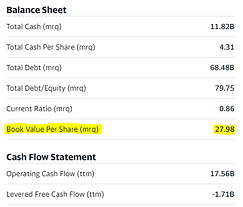
Benefits: Invest in stocks = Returns on Dividends
.png)
.png)
IPO (Initial Public Offer)


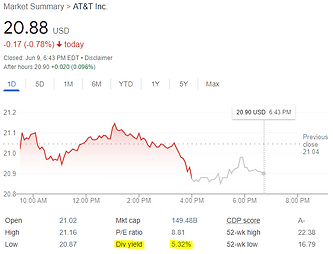
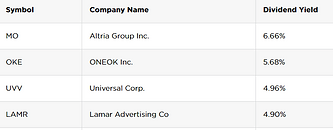
Dividends vs. Interest
Dividends are the amount of money that the company distributes to shareholders (quarterly) from the profits gained.
- It is a good way for companies to circulate money between the company and the shareholders.
Interest comes from the fixed deposit that is mandatory to give.
The dividend comes from shares that are not mandatory to give and it is tax-free.
If Sales ↑ = Profits ↑ = Shares ↑ = Returns to investors ↑
High Dividend Yield! = Great News
Face Value
Face Value is the original price at which the share was bought by the promoters (The person who starts the company) of the company.
Demat Process
Demat: Dematerialization is the move from physical → electronic
Companies on the stock exchange
Levels of Companies depending on how many investors:
- Private Limited (Smaller amount of investors)
- Public Limited (Investing open to everyone)
Turnover
Turnover = Sales (Topline Growth) and Profit after taxes(BotomLine Growth)
Turnover - Expenses = Profit before tax
Sometimes turnover will increase, but profits will decrease because of major expenses.
If Bottomline growth is more than Topline growth, then is it POSITIVE!
Stock Split
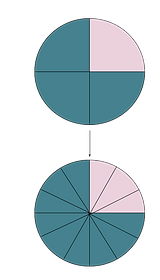
Face Value of the share is split
Number of shares increase
# Shares
Value
Original Face Value:
50,000
$100,000
Revised Face Value:
100,000
$100,000
.png)
3 for 1 Shares
$6 per share
4 shares
Market Value $24
$2 per share
12 shares
Market Value $24
A split does not increase profit, it only increases shares by the ratio.
It measure the efficiency of a company
- In investing the more asset turnover of a company the better the option to invest.
Asset Turnover

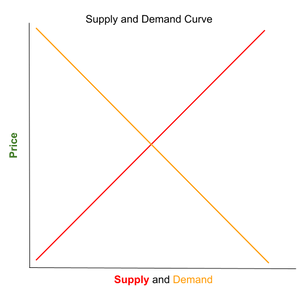
Supply and Demand
- Importance of supply and demand
As Demand ↑ and Supply ↓ = Higher Price
As Demand ↓ and Supply ↑ = Lower Price
Market Timings
Previous Close - Yesterday last price of a share
Pre-Open Market Session = 9:00 to 9:15
9:00 to 9:07 → Order placing time
9:08 to 9:11 → Matching Buyers to Sellers
Market = 9:15 to 4:00
After Market Hours = 4:00 pm to 9:00 am (Next Morning)
After Market Orders during this time
.png)
After Market Pricing
LTP = Last Traded Price
Previous Close - Yesterday last price of a share
Example: Original Previous Close - $1245
$1250 ▲ (5) Gap up opening
$1240 ▼ (5) Gap down opening
(5) = amount changed
Market Pricing
Bid Price (QTY. = Buy orders) - Price at which the buyer is willing to pay
Offer Price (QTY. = Sell orders) - Price at which it is offered
Volume is the # of shares traded during the day.


Bouns
These are share distributed by a company to its current shareholders as fully paid shares free of charge.

Bonus Ratio
Bonus Ratio: 1 to 2
Meaning for every 2 held stocks, 1 is free
Before Bouns - Cum Bouns
After Bouns - Ex Bouns
Announcement Date - Date that tells the bonus ratio
Record Date - Date that the bonus shares are valid to
Order Executing Time
T+ 2 is the trading day plus 2 business days after the day the order executes

If you have prices of more than $10,000.
10% charge for dividends over $10,000.
30% tax for income over $10,000.
Who decides the share prices?
The Supply and Demand of the stock.
What do you need to start trading and investing?

- Demat Account for storing stocks
- Trade Account for Buying and Trading Stocks
- Savings Account to save your money
Investors
RII - Retail Individual Investors (US)
HNI - High Network Individuals
DNI - Domestic Institution Individuals
FII/FPI - Foreign Institutional Investors / Foreign Portfolio Investors

Members (Brokers)
Investors can trade in secondary market through members
Contract Note
To make sure you have your stocks from your broker, you need a contract note:
- This is a receipt from broker to buyer or seller
- Need to be given within 24 hours
-Nowadays, it is sent via email
- The contract note is inspired by regulators (people who see the securities of the market)
Extra things about the contract note:
Quantity of share + Brokers rate per unit = Brokerage total
Corporate Actions
- Bonus, rights, splits, mergers, dividends, or warrants that impact the price of the equity share.
- These actions can be divided into two categories:
1. Stock Benefits
2. Cash Benefits
Basis
Cum Basis - Incorporates the benefits of corporate actions in its price
Ex Basis - The buyer no longer has the benefits of the corporate
PAT Margin (%) or Net Margin


Profits after tax
Selling Price - Cost Price - Expenses = Profit Left is PAT Margin
Markup
Pencil: $10
Sell: $15
Markup: 50%
Margin
Pencil: $10
Sell: $15
Markup: 1/3 or 33.3%
Return on Equity (ROE)
ROE is the money made at the end of the time frame by the money put into the investment at the beginning of the time frame.
*Example - Who will make more money?
A person with costly items but sell less or a person with less costly items and sells more?

Total Debt/Equity (x)
Case 1
Equity Capital
Debt
Net Profit
ROE
100% Equity and 0 Debt
100
0
20
20.00%
Case 2
Equity Capital
Debt
Net Profit
ROE
50% Equity and 50% Debt
50
50
14 (After Interest of 6 (12% of 50))
28.00%
When Investing → Company should have about 0 debt and equity.
Cash Cycle (Days)

It is an effective measure that shows the amount of time it takes for a company to
convert its investment in inventory to cash.
- The lower, the better
- Negative cash cycle means they get the money in advance
How to identify Stocks to Avoid
- Calculate stocks in 5 years
- Add Operating Cash flow and compare by added net profit
- The net profit needs to be about an equal amount to the operating cash flow
Rights Issue
When a company gives stockholders the right to purchase a certain amount of shares from the company at a discounted price.
Problems with this:
- Does not increase profits
- Cuts down to earnings per stock (EPS)
- Only increases the number of shares
Rights Issue - 1:2
Net Profit
EPS
Face Value
# of shares
Share Capital
March 2018
300
3
10
100
1000
March 2019
300
1
10
300
3000



How to Analyze Banking Stocks?
1. Current Account Savings Account (CASA ratio)
The percentage of current accounts and saving accounts to deposits
-For bank investing, it is good if CASA% is high
2. Net NPA ratio (Non performing assets)
How much money does not come back after bank loan money (Ex. 7% = NPA; money not given back out of 100%)
- Less percentage is a good bank
- More percentage is not a good bank
3. Cost of Liabilities %
The average interest needed to pay to the people they took deposits from customers.
4. Advances growth % or Loan growth %
Tells the % of how much more loans were given compared to the previous year.
5. Capital Adequacy Ratio (CAR)
How much money the bank already has.
- The higher the CAR%, the higher the bank can bring advance growth.
- 12% or less is not a good sign

Price Adjustments
Adjust price is the value of a position on the cum, and ex dates remain the same.
Stock Exchange
A platform for investors to buy and sell securities.
- The world's largest stock exchange is the New York Stock Exchange (NYSE)
Other examples of stock exchanges:
- Nasdaq
- American Stock Exchange
- London Stock Exchange
- Shanghai Stock Exchange
- The Stock Exchange of Hong Kong
- TSX
- NSE

Clearing House
A financial Institution is formed to facilitate the exchange of payment, securities, or derivative transactions.
Market CAP
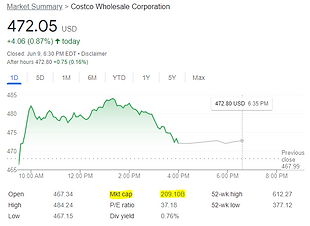

# of shares x current share price = total net worth of the company
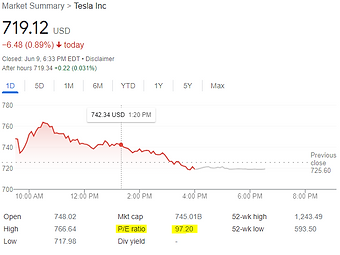
P/E Ratio (Price to Earn)
Company's share $ to company's earnings per share.
-If the P/E ratio is 0, then it means that the company is operating at is loss.
-The ideal amount of P/E ratio should be around 20-25.
-If the P/E ratio is higher than 20/25, then it means that the company is overvalued,
so it is not necessarily good news for the investors.
Enterprise Value
- Measures company's total value including market cap, debt and excludes cash
- Market Cap - Cash (in-store) + debt = enterprise value
Extremely Overrated!
P/B Ratio
Walmart
Relationship between the current price and book value.
- Book value is for a physical object
- Book value is a good ratio for banks
- Book value is set, meaning if a company gets sold, then each shareholder gets the book
price instead of the stock price per share
Promoter Holding
The % of shares that are held by the promoters of the company.
Pledge % = how much of the share is owned by banks because the promoter is in debt;
how much they owe to the bank.